You're not too much. The room's just too small.
One of the pictures in my office is when I was seven years old, standing on stage with my church children's choir.
We were singing "This Little Light of Mine" for the congregation - rows and rows of people watching us.
I was the only kid up there wiggling my hips and raising my finger in the air, waving it around to let my little light shine without a care in the world.
In the picture you can tell I'm fully into it - beaming, moving, shining. In the middle of wiggling. And the little girl next to me? She's giving me a side-eye like What the heck are you doing? That’s not the way we’re supposed to do it.
I was oblivious when it was happening, and when I look at the picture now, I smile. I was being myself and not wondering if I was "too much" or if I should tone it down to match the other kids standing still.
And the fact that the other kids stood still? As long as that was right by them, that’s ok. But if someone side-eyed me because they didn’t know what to make of me, that was never my problem to fix.
For a long time though, I forgot that.
In my 20-year corporate career, I cared about depth when the culture valued surface metrics. When high-stake projects demanded more, I was able to transform resistance into engagement when the culture felt more “my way or the highway.” I gave strategic counsel to directors and VPs even though my title said I shouldn't be operating at that level.
And I kept running into people who wanted me to dim my light to fit into their box, so they could be more comfortable. For a long time, I did. I tried to “stand still” and dim my light to match the room.
Until I realized: I'm not too much. The environment was just too small.
The same is true for you.
If your natural way of operating keeps getting called "too much,” or if your depth or authority feels like a liability, if you keep trying to shrink to fit a space that was never built for who you are — the problem isn't you.
Perhaps it’s not something as overt as that, but more subtle. Maybe the environment or your business used to feel expansive and now it feels like a shoe that’s too tight or clothes that shrunk in the dryer.
In any of these scenarios, the environment is just too small for who you're becoming, and the answer isn't to dim yourself. Instead, it’s that the light was always there. It just got covered.
Where are you standing still when everything in you is ready to move?
If you'd like to go deeper:
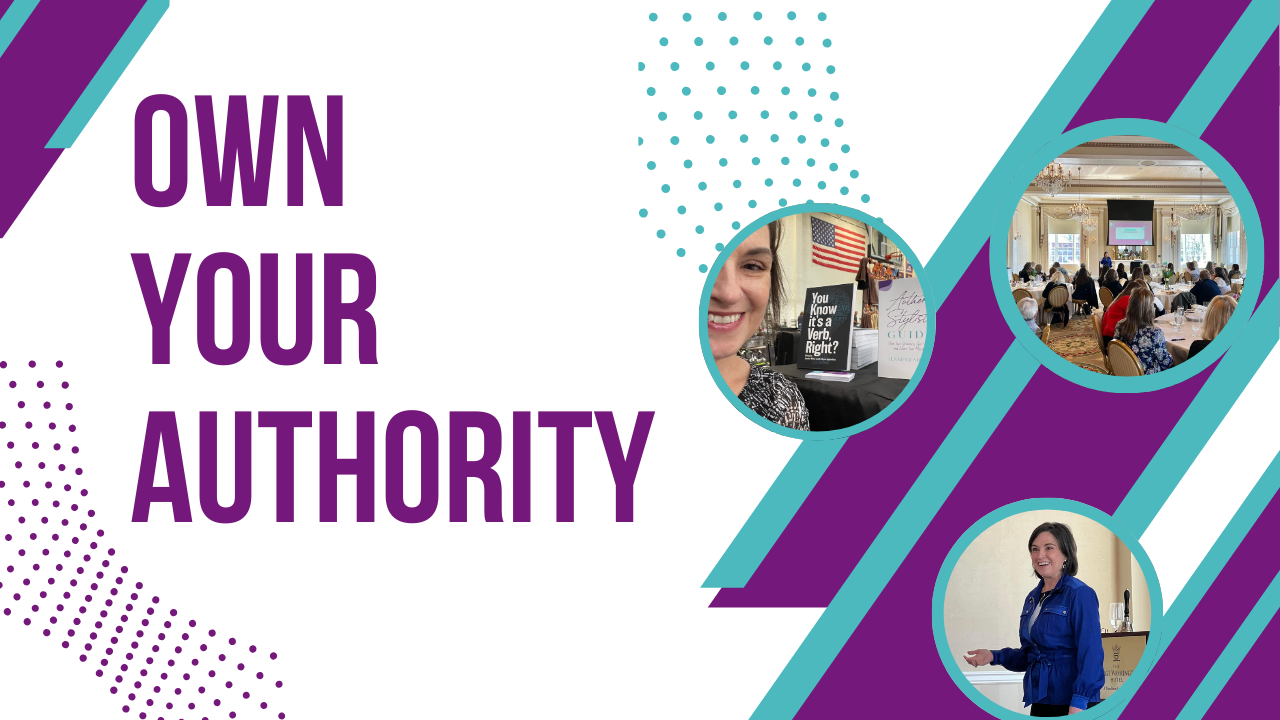
You Know It's a Verb, Right?
Leadership isn't something you earn once and then have. It's something you practice — every day, in every interaction, at every level of the work.
This book (which I had the joy of co-authoring) is for anyone who senses there's more to leadership than their title reflects — whether you're early in your journey, already leading a team, or running a business and realizing that leading yourself and your clients is its own kind of leadership. Using everyday language and real-life examples, it's a roadmap for the practice of becoming the leader you're already capable of being.
Because leadership doesn't happen because you sat in a classroom or earned a credential. It happens because you prepare for it.
Author Stylist Guide: Own Your Greatness, Get Visible, and Share Your Message
You published the book. Now the opportunity arrives — a book signing, a podcast invitation, a speaking engagement — and suddenly it's not about the writing anymore. It's about you, showing up, in real time, as the person behind the work.
The Author Stylist Guide is for that moment. Not how to get more opportunities — how to make the most of the ones that come to you, so you show up with confidence, shine in the room, and let your book and message reach the people who actually need them.
You already have the courage and the gifts that got you here. This book helps you use them.
Quiet Critic Assessment
See what the Quiet Critic has made invisible, so you can stop hiding your power and start owning your authority during those big moments that matter most.
*your info will not be shared